Bathroom Lighting Design: Task, Ambient, Accent
Lighting is one of the most overlooked parts of a bathroom remodel, and it's also one of the easiest to get wrong, because most builder-grade bathrooms are wired for exactly one light source doing all the work. Good bathroom lighting design isn't about one fixture. It's about three layers working together, and once you understand what each one is doing, planning your own remodel gets a lot easier.
What "Layered Lighting" Actually Means
Designers talk about three layers for a reason: each one solves a different problem. Task lighting is what you need to see clearly while applying makeup, shaving, or reading a prescription label. Ambient lighting is the general fill light that helps you move comfortably through the space and sets the overall mood. Accent lighting is the detail layer, the light that highlights a shower niche, a freestanding tub, or a piece of stone you actually want people to notice.
A single flush-mount ceiling fixture tries to do all three jobs at once but does none of them well. The problem is that it casts shadows under your chin at the mirror, leaves corners dim, and has no way to shift from bright morning light to a softer evening mood. A layered plan fixes all three problems, and it's a hallmark of the kind of custom bathroom remodeling that separates a builder-grade bathroom from a high-end bathroom design.
Task Lighting: Getting Ready Without the Washed-Out Look
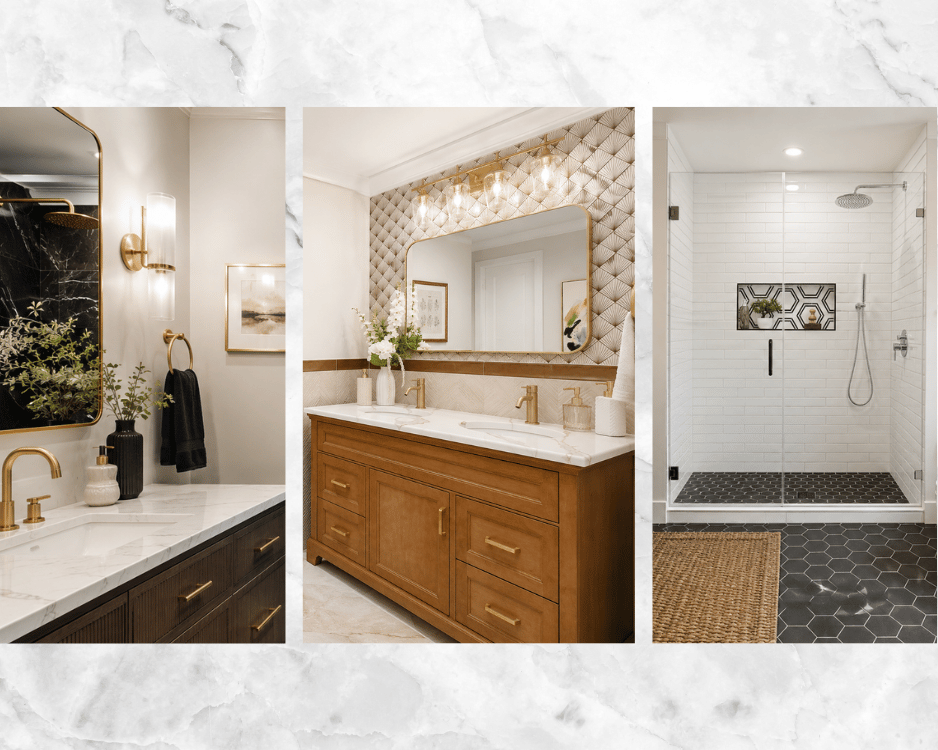
Task lighting lives at the mirror, and it's the layer a lot of bathroom designs tend to get wrong. The most common mistake is a single light bar mounted above the mirror, which throws light down and creates shadows under the eyes, nose, and chin, the opposite of what most people want when getting ready.
Vertical sconces mounted on either side of the mirror, roughly 60 to 65 inches from the floor and spaced 28 to 36 inches apart, light the face evenly from both sides and eliminate that shadowing. If you're using an above-mirror fixture instead, it should span at least three-quarters of the mirror's width and sit high enough, around 78 to 80 inches from the floor, to avoid glare.
If you want to get a little technical and really make the most of your lighting, there are two details that matter more than people expect. First, look for a color rendering index (known as CRI), of 90 or above, which is what makes skin tones and colors look true rather than dull or off. Second, aim for a color temperature in the 3000K to 4000K range at the mirror. Warmer than that can flatter in the moment but throw off how you judge makeup or grooming once you step into daylight, while true daylight tones can feel closer to a clinical exam room. For brightness, a good rule of thumb is 1,200 to 1,800 lumens for a smaller single vanity, 1,800 to 2,400 for a medium vanity, and 3,000 to 4,000 lumens for a double vanity spread across both sides.
Ambient Lighting: The Layer That Sets the Mood
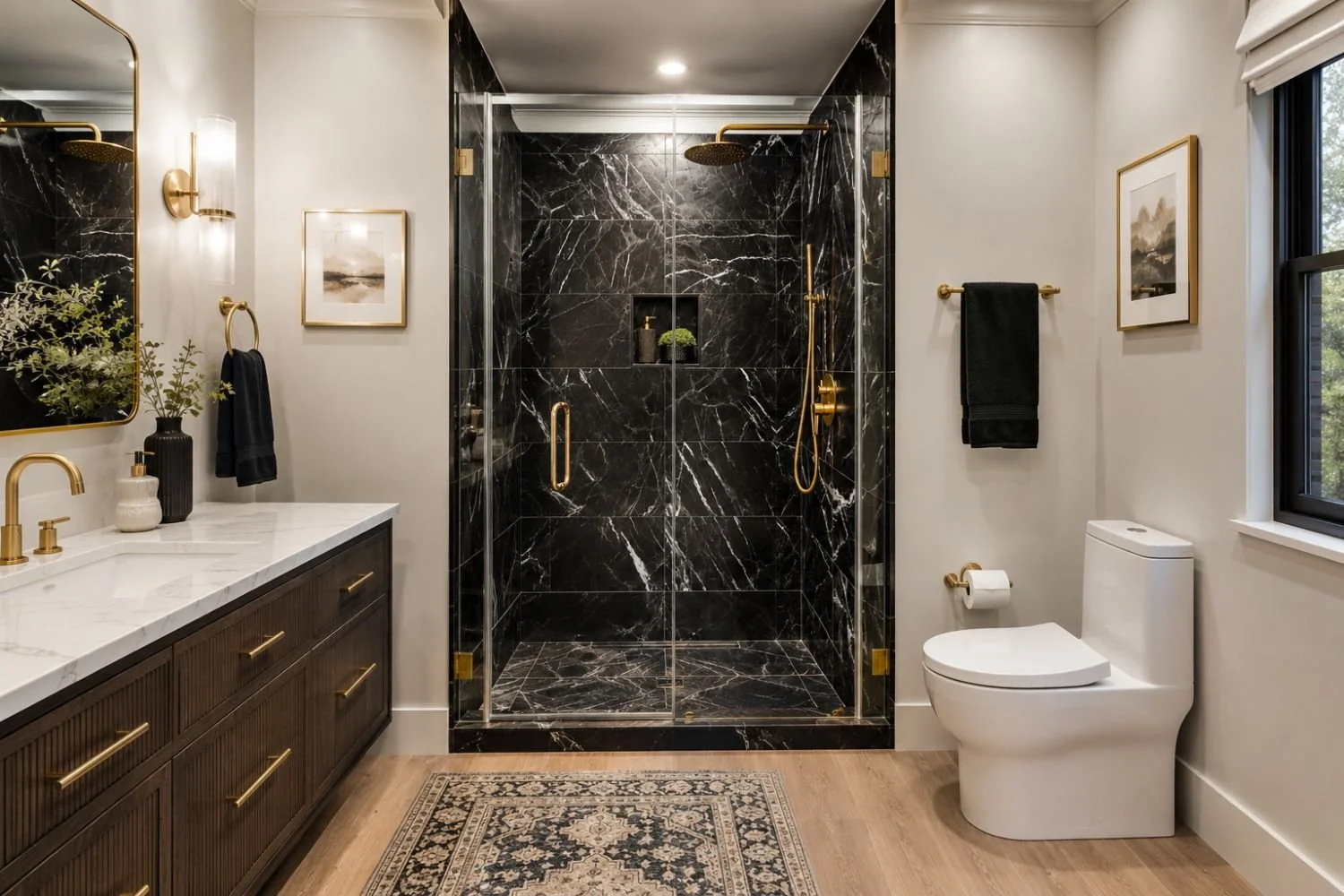
Ambient light is what fills the room once task lighting is handled, usually through recessed cans, a ceiling fixture, or increasingly, a backlit mirror that glows from behind or around its edge for soft, shadow-free illumination. This layer is where a dimmer earns its keep. The same bathroom that needs bright, even light at 7 a.m. should be able to shift to something quieter for a soak in the tub that evening, and dim-to-warm LED technology, which shifts to a warmer, candle-like tone as it dims, makes that transition feel intentional rather than just dark.
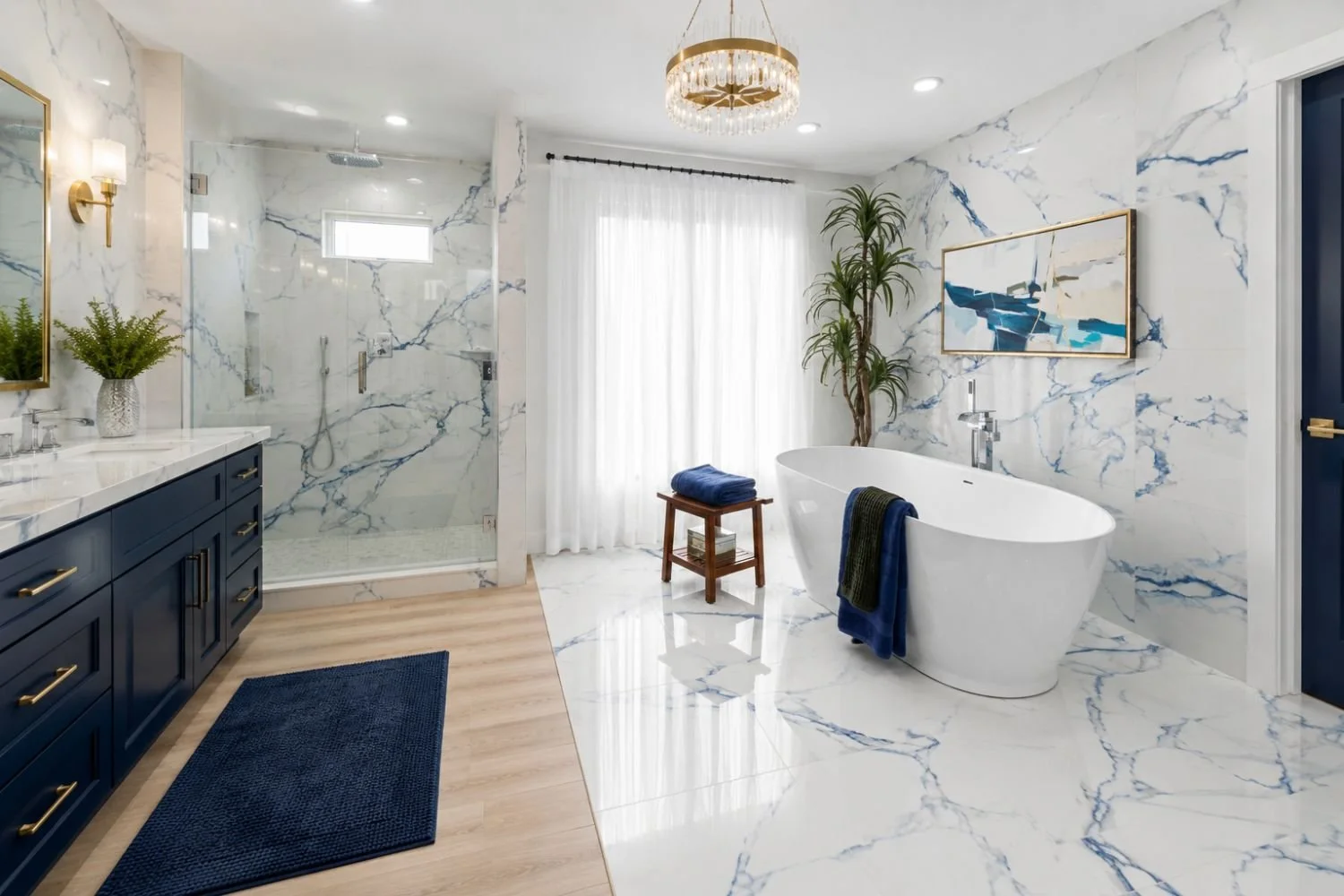
Ambient lighting is also where finish and material choices show up most. Fluted or ribbed glass, alabaster diffusers, and aged brass are all showing up in bathrooms across Wayne, Blue Bell, and King of Prussia right now, and they do double duty: they soften the light itself while adding a design detail that reads as custom rather than off-the-shelf.
Accent Lighting: The Detail That Makes It Feel Custom
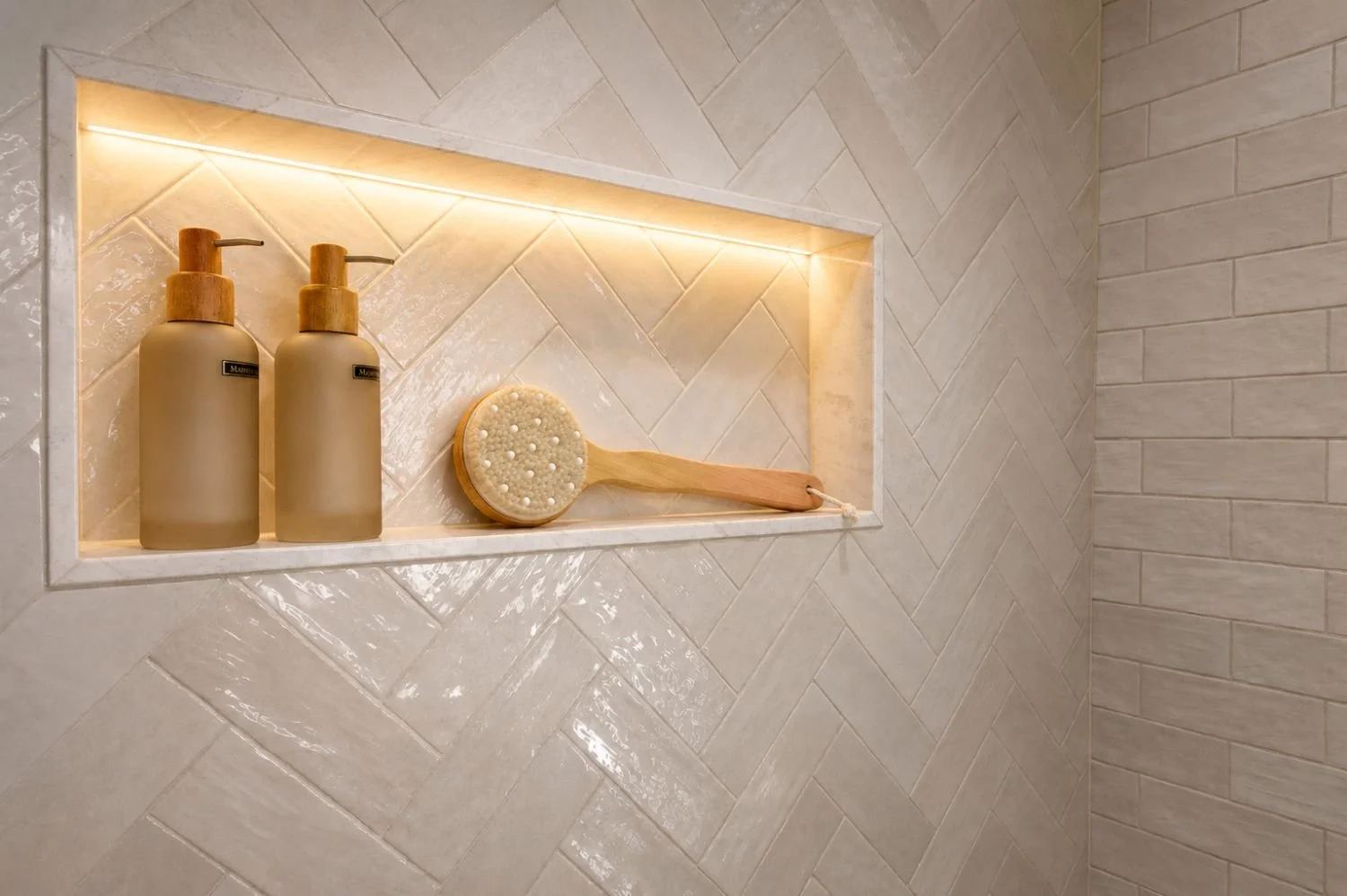
Accent lighting is the smallest layer and the one that gets skipped most often because, in reality, it’s not a necessity. But it is often what makes a bathroom photograph well and feel finished. A wet-rated LED strip tucked into a shower niche does more than look good. It’s a really cool, modern upgrade in our opinion, but it also makes it easier to actually see your products. The same strip run under a floating vanity adds a soft glow at night without flipping on a bright overhead light, and it can highlight a striking stone or tile choice on a feature wall or tub surround.
Because these fixtures live in or near wet areas, they need to be rated for that exposure. This is an easy-to-miss detail unless you’re working with a contractor who's thinking about lighting from the start of the project.
Bringing It Together in Your Remodel
Many well-planned bathrooms end up with three separate switches, or one smart control with three separate channels: sconces or a backlit mirror for task light at the vanity, dimmable recessed cans or an ambient fixture on the ceiling, and a low-voltage accent line for the niche, under-vanity, or feature wall. None of this is complicated when planned early, but can be a little trickier after the fact. Adding a shower niche light or moving a sconce after the walls are closed up is a much bigger job than wiring it in during a full renovation.
That's why we build the lighting plan into the design conversation from day one on every full bathroom remodel, working alongside licensed electricians to make sure placement, wiring, and switching are right before anything gets covered up.
Let's Plan Your Bathroom's Lighting Together
If your current bathroom relies on one overhead light doing the job of three, that's worth fixing in your next remodel, not working around. As bathroom remodeling experts serving the Philadelphia suburbs, we build lighting into the design plan for every custom bathroom remodeling project we take on.
Schedule your free in-home estimate or call us at (215) 500-5473 to talk through what a layered lighting plan could look like for your space.
You're also welcome to visit our showroom at 713 Bethlehem Pike in Glenside, PA to see how fixtures, tile, stone, and lighting all come together in person.
If you liked this post, you’ll love these: